Pages

Showing posts with label Artificial Intelligence. Show all posts

Monday, 6 June 2016

Expectation Maximization for Gaussian Mixture Model in OpenCV

I recently wrote code for Gaussian Mixture Model (GMM) based clustering in C++. As always, I found it much convenient to use OpenCV for manipulating matrices. Although there already exist an implementation of Expectation Maximization-based GMM, I tried to understand it by writing my own implementation.

The basic idea of GMM is to first randomly assign each sample to a cluster. This provides initial mixture model for clustering. This is then optimized using Expectation - or the probability/score of assigning each sample to each component in GMM - and Maximization - or updating the characteristics of each mixture component with the given probability/score . An attractive attribute of GMM is its ability to cluster data that does not have clear boundaries for clusters. This is achieved by having a probability/score for each sample from each cluster component.

Saturday, 27 September 2014

Saying hello to the Internet of Things!

A while back I signed up for Microsoft Developer Program for Internet of Things ( #iot for more info ). As much as I love exploring new things this was extremely exciting thing for me.

I have always had the curiosity to know more and try to hack things my own way. Even as a kid I had an investigative mind which always tried to discover more about how everything works. You can imagine this curiosity by the fact that I got severe electric shock as a kid, when I tried to cut a live wire from "Clothes Iron". This curiosity grew more and more in me, to a point that I did an engineering degree (Yes! I was born with an engineer's mind). I have always been interested in hacking different devices to make something more useful out of it.

Sunday, 15 December 2013

One Image hiding over eight thousand different stories...


Working with large datasets has its own pros and cons. Whatever the implementation or field might be, there is always a need for training a machine learning algorithm to recognize the pattern in that data. We often discuss this "Pattern" in many different instants and a big chunk of literature addresses this recognition problem. However it is often not considered important to get to know how this pattern looks like? why is it even called "Pattern" in the first place??

Interestingly the answer lies in the above image which shows a collection of 8000 different samples, arranged in columns. Here the first thing to notice is that there actually is a repeating pattern in the data. This is the exact pattern which we are trying to learn. It may not make sense when looking at it, however with correct label representation, each sample can be used to build a model which is able to identify each class with high accuracy.

Monday, 26 August 2013

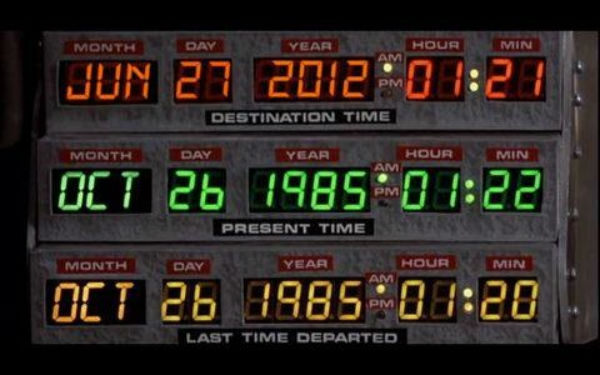
OUT-A-TIME: What is the fourth dimension?

I have been doing my research using three dimensional datasets acquired from both real and synthetic methods. During my past research I utilized Microsoft Kinect to acquire real-world objects in their three dimensional space. On the contrary I have also used computer graphics to generate such three dimensional datasets. Some other projects I have worked on have also revolved around concepts which were vaguely related to different multi-dimensions.

Working with these multi-dimensional datasets, I have always been interested in finding out how these multi-dimensions would exist in reality (if they ever did). Here I was more interested in the question about physical space we live in. Annoyingly this has always confused me. I simple could not comprehend more than three dimensions.

For those of you who are familiar with the picture below, this post is going to be as interesting for you to read as it was for me to write.


Wednesday, 10 April 2013

The Universe is in us!

I have been away from this blog for a while, and there are a number of reasons for that. Mostly I have been really really lazy with lots of work and sleep. The good news is that I am back and I have quite a few things to post about.

While reading this, you might be wondering what this post is about? Well its about surprising similarities between two totally different worlds. The first one involves the microscopic world of DNA. The data I used is specifically cancer mutated DNA I was provided when I went to a GameJam for Cancer Research UK. One of the problems we tried to address in this gamejam was to identify the regions in DNA with cancer mutations. Being a Computer Vision Engineer, I have been really interested on representing the data in a visual way. While I might not have succeeded in creating something useful, however what I found was quite interesting.

Wednesday, 6 March 2013

Game hackathon for Cancer Research UK

Over the weekend I was at the google campus london for the hackathon for Cancer Research UK. The objective of this hackathon was to convert dna data into an interactive and social game to help accelerate the cancer research. The data provided by Cancer Research UK had different mutations in dna, which could be identified by sudden shift in the data points. Approximately 40 developers and gamer spent 48 hours to design different games that utilized this data, had the social gaming experience and above all provided some feedback for easy identification of the dna mutations resulting in Cancer.


The outcome was a number of games with different diverse ideas, each one focusing on one thing, to analyse the data using human eye. More details on this event coming soon, as we are all waiting to hear about it from Cancer Research UK.

Report on this event can be found here: 
City University Press Release on this event: http://tinyurl.com/cmxdbyc

Wednesday, 27 February 2013

Future of Music == Gesture + AI + Singing

While doing some research, I found this talk in which a musician talks about how she was able to use different gestures to compose a song. The actual talk can be seen below:


What is the first thing that comes to your mind after watching this? yes, it is amazing to see such a performance for a music fanatic. But for me it is even more interesting to see the different aspects of data fusion involved. By looking at her performance, there are a number of things that comes to my mind:

1. Hand gestures recognition using data gloves.
2. Body posture recognition using Kinect Sensor.
3. Localization of the person on stage using Kinect Sensor.

You might have noticed, that there are different hand gestures which are used to start the editing or instrument playing sequence. While the hand gestures are used to play specific notes as well, body posture specifies the different after effects/post processing. Similarly the location of the singer is used to relate it to different music effects.

This really shows the potential of natural interaction technology, and what might be achieved if new ideas are integrated into these natural interaction methods.

Reference:
http://www.kinecthacks.com/imogen-heap-talks-ableton-controlling-gloves/

Thursday, 9 August 2012

How to train your dragon?

toothless

No! this post is not about the dragon from the animated movie (although it's one of my favourite). However this picture explains almost everything there is about the topic. For those of you who have seen this movie, computer vision machines can be thought to be like the dragon which can not fly. You have to train it about every single incident and how it should react to each one of them in order to fly.

Yup! that's right, this post is about training. Training a computer!