Pages

Tuesday, 19 November 2013

Implementing Noisy TV in OpenCV...wait WHAT?!?

If you are a 90's kid like me, you must admit that back then there was nothing more annoying than losing signals on your TV. Before the age of internet, TV was the main source of entertainment. When signals were lost, all you could see was an infinite race of millions of flies on your screen (a noisy image) and making it more intolerable was the loud noisy sound of the noise.


Tuesday, 8 October 2013

Mind == Blown!


 So sometime back I saw this video presentation of a new and, what I like to call it, novel method for extracting 3D structures from a single image. Part of the reason why this blows my mind, is that this approach is well defined for a specific scenario and it utilizes the best of both human brain and computer's processing power.

We have a great sense of depth perception of objects. Our brains are well trained to construct an object's three dimensional model, by just looking at pictures. This, however, is a trivial and a highly challenging task for computer algorithms. On the other hand, computers are capable of computing and interpolating data at a much faster rate than humans, given that the task is simple and fairly straightforward.

Tuesday, 10 September 2013

Computer Vision is everywhere...

As most of the android developers, I am a big fan of google nexus tablets and smartphones. Have been using a google nexus 4 for a while now and I am impressed by all kinds of cool stuff you can do with it. A number of cool applications are based on different computer vision techniques. In this post I will be discussing these applications.
 
 
To list just a few obvious ones, the android based smartphones have face recognition based unlocking, camera app which can pick up faces, creating panoramas, editing photos and using readings from a number of inertial sensors to stitch multiple picture into one 3D picture called Photo Sphere.
 

Monday, 26 August 2013

OUT-A-TIME: What is the fourth dimension?

I have been doing my research using three dimensional datasets acquired from both real and synthetic methods. During my past research I utilized Microsoft Kinect to acquire real-world objects in their three dimensional space. On the contrary I have also used computer graphics to generate such three dimensional datasets. Some other projects I have worked on have also revolved around concepts which were vaguely related to different multi-dimensions.

Working with these multi-dimensional datasets, I have always been interested in finding out how these multi-dimensions would exist in reality (if they ever did). Here I was more interested in the question about physical space we live in. Annoyingly this has always confused me. I simple could not comprehend more than three dimensions.

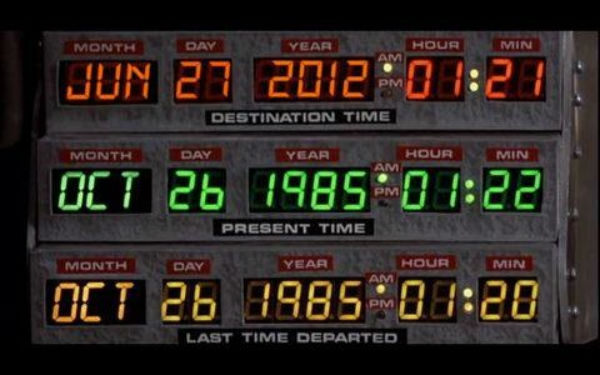
For those of you who are familiar with the picture below, this post is going to be as interesting for you to read as it was for me to write.


Monday, 12 August 2013

Setting up freeglut and GLTools with Visual Studio 2010

It's good to be writing a tutorial after a long time and there are a number of reasons for that. First of all, I have been really busy with a lot of work and research (well actually I still am!). On the other hand, it is only until recently that I have been struggling with a setup which has little tutorials documented, while there seems to be a lot of beginner developers facing the same problem as I am.

This particular tutorial deals with setting up a Microsoft Visual C++ 2010 Project for use with examples found in the OpenGL Superbible 5th Edition. The book has a section which details the same process for a Visual C++ 2008 project, which is completly different than this tutorial. As always, I have tried to keep everything simple and straightforward so even a person who has no knowledge about these settings can make them work.